



PARADISE is an EIC Transition project advancing a disruptive Electroceramic Barrier Discharge (EBD) technology for the removal of volatile organic compounds (VOCs) and odours from industrial and indoor air.
PARADISE is an EIC Transition project advancing a disruptive Electroceramic Barrier Discharge (EBD) technology for the removal of volatile organic compounds (VOCs) and odours from industrial and indoor air.
Industrial activities generate VOCs and odours that must be controlled to protect human health, meet increasingly stringent environmental requirements and reduce impacts on surrounding communities.
Existing solutions such as thermal oxidation, biofiltration and activated carbon can involve high energy consumption, recurring consumables, maintenance requirements or limitations when treating dilute and variable pollutant streams.Conventional dielectric barrier discharge (DBD) plasma systems can also require high ignition voltages and may generate ozone or other unwanted by-products.
PARADISE addresses these limitations at their technological core: the discharge barrier itself.
PARADISE addresses these limitations at their technological core: the discharge barrier itself.
At the heart of PARADISE is PRODEA’s patented Al₂O₃/MoSi₂ Electroceramic Barrier Discharge (EBD), replacing the conventional dielectric barrier used in cold-plasma reactors.
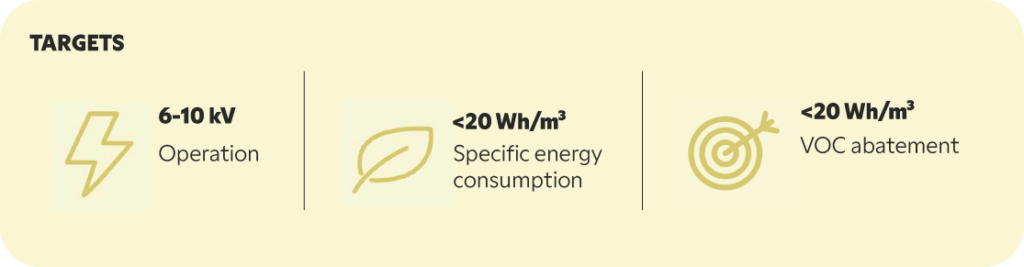
Al₂O₃ provides oxidation resistance and mechanical robustness, while MoSi₂ helps control semiconducting behaviour, enabling more homogeneous plasma discharges at lower voltage. Combined with an innovative multi-zone reactor architecture, the technology is designed to broaden pollutant abatement while reducing energy demand and avoiding hazardous secondary pollutants.
At the heart of PARADISE is PRODEA’s patented Al₂O₃/MoSi₂ Electroceramic Barrier Discharge (EBD), replacing the conventional dielectric barrier used in cold-plasma reactors.
Al₂O₃ provides oxidation resistance and mechanical robustness, while MoSi₂ helps control semiconducting behaviour, enabling more homogeneous plasma discharges at lower voltage. Combined with an innovative multi-zone reactor architecture, the technology is designed to broaden pollutant abatement while reducing energy demand and avoiding hazardous secondary pollutants.
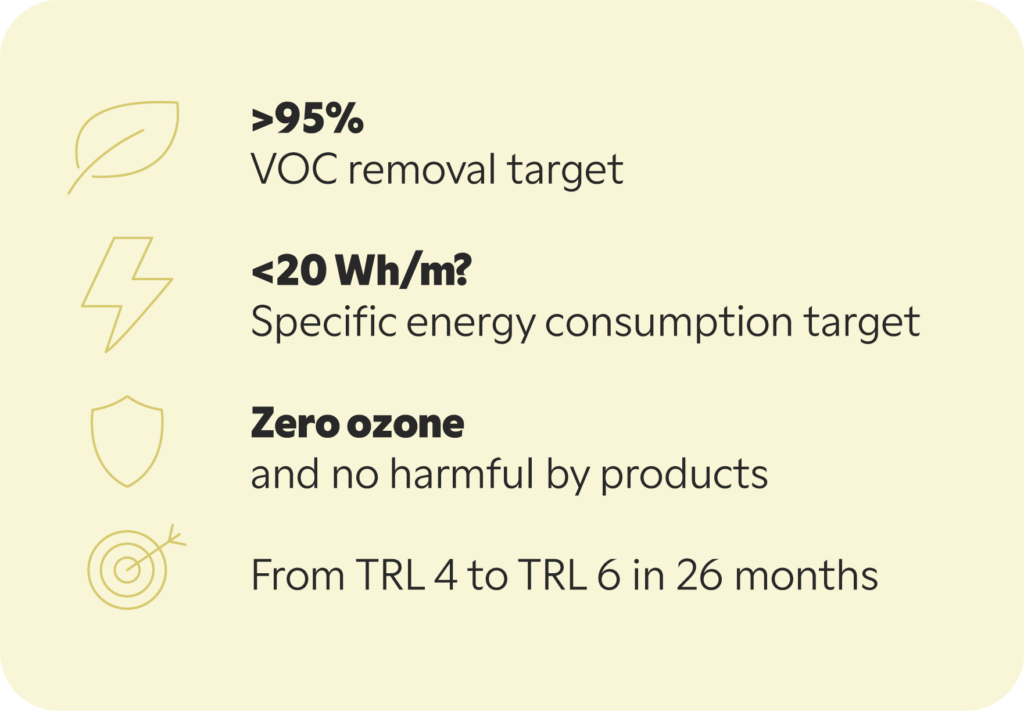
EBD components up to 150 mm have already demonstrated breakthrough potential at TRL 4. The remaining challenge is to manufacture large electroceramic components with the reproducibility, homogeneity and cost efficiency required for industrial deployment.
PARADISE transfers Microwave Sintering advances developed through the EU-funded CEM-WAVE project to large Al₂O₃/MoSi₂ components. By reducing temperature gradients and improving porosity homogeneity, the project aims to establish a reproducible and scalable manufacturing route for EBD components and progress the technology to TRL 6.
EBD components up to 150 mm have already demonstrated breakthrough potential at TRL 4. The remaining challenge is to manufacture large electroceramic components with the reproducibility, homogeneity and cost efficiency required for industrial deployment.
PARADISE transfers Microwave Sintering advances developed through the EU-funded CEM-WAVE project to large Al₂O₃/MoSi₂ components. By reducing temperature gradients and improving porosity homogeneity, the project aims to establish a reproducible and scalable manufacturing route for EBD components and progress the technology to TRL 6.
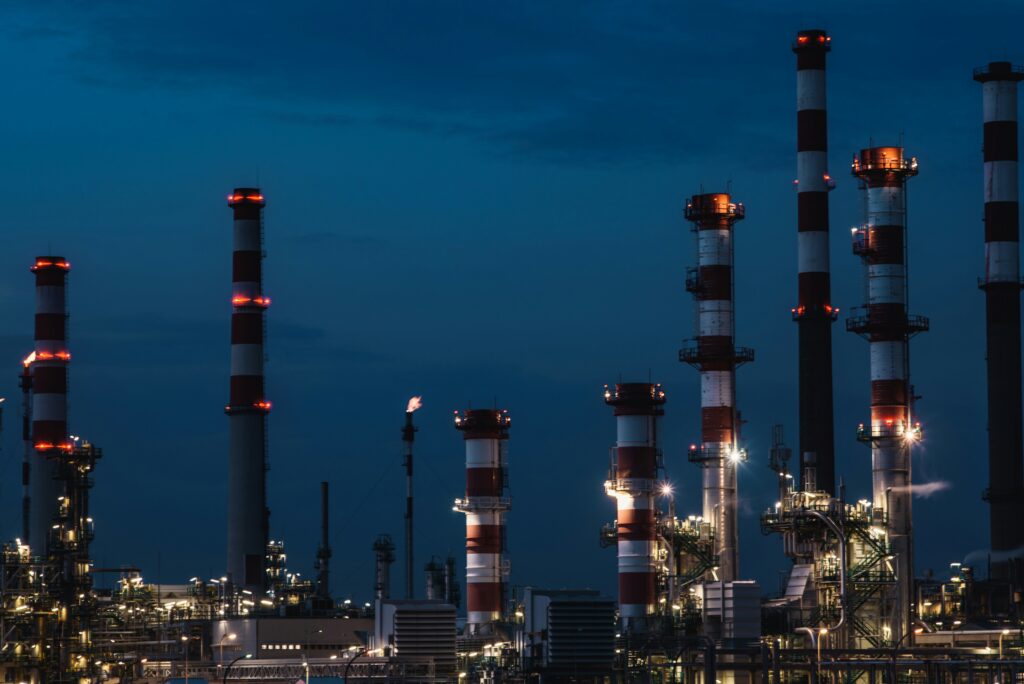
INDUSTRIAL AIR TREATMENT
1,200 Nm³/h EBD demonstrator at an agri-food industrial site, with a hybrid EBD + biofilter pathway to accelerate validation and market adoption.
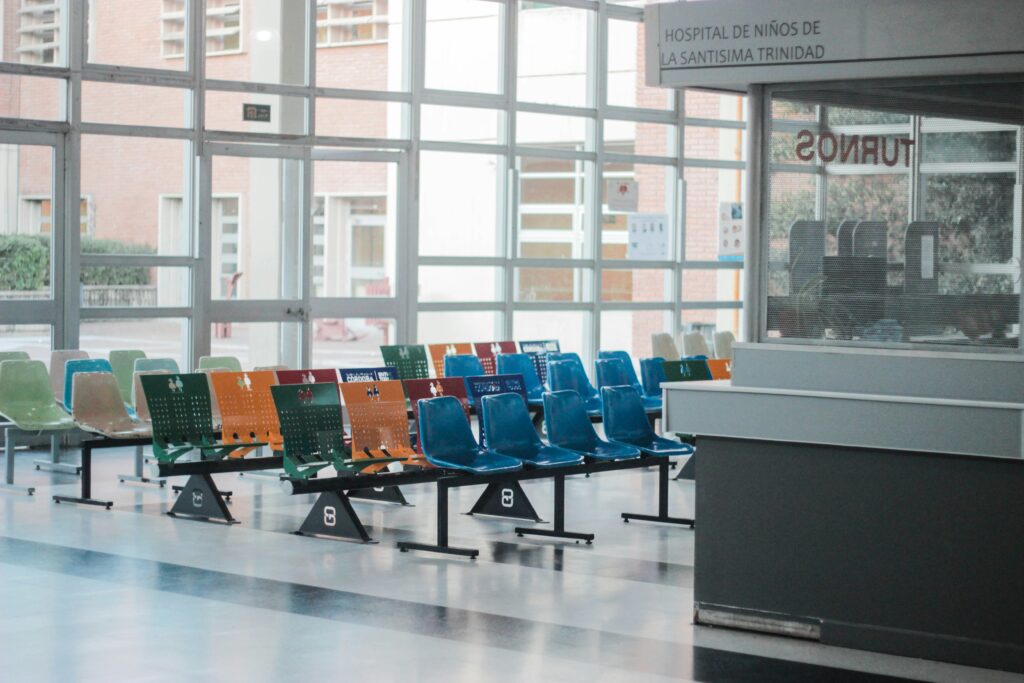
INDOOR AIR QUALITY
Pilot validation in healthcare environments, with further potential in laboratories and maritime applications.
INDUSTRIAL AIR TREATMENT
,200 Nm³/h EBD demonstrator at an agri-food industrial site, with a hybrid EBD + biofilter pathway to accelerate validation and market adoption.
INDOOR AIR QUALITY
Pilot validation in healthcare environments, with further potential in laboratories and maritime applications.
PARADISE brings together PRODEA DEPOLLUTING’s cold-plasma innovation and exploitation capacity with IPCF-CNR and UNIPI expertise in microwave-assisted processing, electromagnetic modelling, advanced ceramics and materials characterisation.
PARADISE brings together PRODEA DEPOLLUTING’s cold-plasma innovation and exploitation capacity with IPCF-CNR and UNIPI expertise in microwave-assisted processing, electromagnetic modelling, advanced ceramics and materials characterisation.
Follow the project as PARADISE progresses from materials and process development to large-scale manufacturing, reactor integration, real-world validation and preparation for market uptake.
Follow the project as PARADISE progresses from materials and process development to large-scale manufacturing, reactor integration, real-world validation and preparation for market uptake.
Launched by PRODEA DEPOLLUTING | Funded by the European Innovation Council (EIC)
Launched by PRODEA DEPOLLUTING | Funded by the European Innovation Council (EIC)

Funded by the European Union. Views and opinions expressed are however those of the authors only and do not necessarily reflect those of the European Union or the European Innovation Council and SMEs Executive Agency (EISMEA). Neither the European Union nor the EISMEA can be held responsible for them.