ABOUT PARADISE
PARADISE is a Horizon Europe EIC Transition project developing a new generation of cold-plasma technology for air depollution. The project advances PRODEA’s patented Electroceramic Barrier Discharge (EBD) technology by combining advanced Al₂O₃/MoSi₂ electroceramics, an innovative multi-zone plasma reactor and Microwave Sintering (MWS).
The ambition is to overcome the manufacturing bottleneck currently limiting industrial scale-up, progress the technology from TRL 4 to TRL 6 and establish the technical and market foundations for future deployment in VOC and odour abatement.
FROM CEM-WAVE
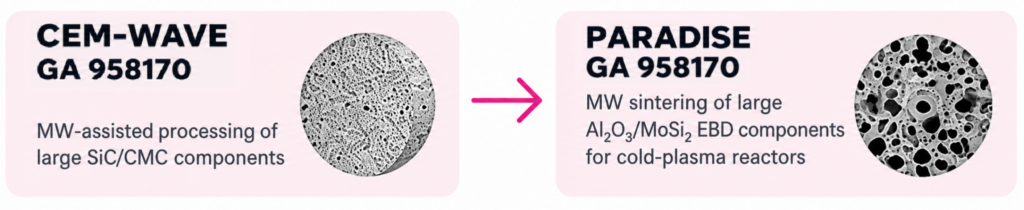
PARADISE builds on results from the EU-funded CEM-WAVE project (GA No. 958170), which demonstrated microwave-assisted production of large-scale SiC-based Ceramic Matrix Composites at TRL 4.
CEM-WAVE developed knowledge and equipment for controlling microwave-assisted processing of large ceramic composite components. PARADISE transfers this know-how to a new challenge: the sintering of large Al₂O₃/MoSi₂ electroceramic barriers for cold-plasma reactors.
This creates a clear EIC Transition pathway: from validated research results and existing EBD performance to scalable manufacturing, integrated demonstrators and market readiness.
FROM CEM-WAVE
PARADISE builds on results from the EU-funded CEM-WAVE project (GA No. 958170), which demonstrated microwave-assisted production of large-scale SiC-based Ceramic Matrix Composites at TRL 4.
CEM-WAVE developed knowledge and equipment for controlling microwave-assisted processing of large ceramic composite components. PARADISE transfers this know-how to a new challenge: the sintering of large Al₂O₃/MoSi₂ electroceramic barriers for cold-plasma reactors.
This creates a clear EIC Transition pathway: from validated research results and existing EBD performance to scalable manufacturing, integrated demonstrators and market readiness.
TECHNOLOGICAL CHALLENGE
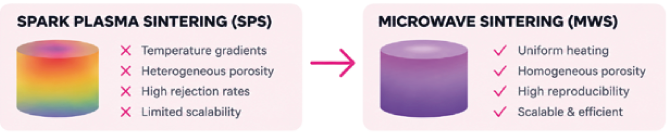
EBD components up to 150 mm in diameter have been fabricated by Spark Plasma Sintering (SPS) and validated in plasma reactor tests. However, radial temperature gradients during SPS can produce heterogeneous porosity in larger parts, leading to high rejection rates and limiting economic scalability.
Conventional sintering can produce homogeneous materials but requires long firing cycles, multiple processing steps and extensive post-firing machining. PARADISE therefore investigates Microwave Sintering as the primary route to combine rapid processing with improved temperature uniformity, reproducibility and energy efficiency.
TECHNOLOGICAL CHALLENGE
EBD components up to 150 mm in diameter have been fabricated by Spark Plasma Sintering (SPS) and validated in plasma reactor tests. However, radial temperature gradients during SPS can produce heterogeneous porosity in larger parts, leading to high rejection rates and limiting economic scalability.
Conventional sintering can produce homogeneous materials but requires long firing cycles, multiple processing steps and extensive post-firing machining. PARADISE therefore investigates Microwave Sintering as the primary route to combine rapid processing with improved temperature uniformity, reproducibility and energy efficiency.
THE PARADISE INNOVATION

The PARADISE technology replaces the conventional dielectric barrier used in non-thermal plasma reactors with a patented Al₂O₃/MoSi₂ Electroceramic Barrier Discharge. Alumina provides oxidation resistance and mechanical robustness, while MoSi₂ contributes controlled semiconducting behaviour that supports homogeneous discharges at lower voltage.
The electroceramic barrier is combined with an innovative multi-zone reactor exploiting complementary plasma regimes. Together, these features are designed to improve pollutant removal, reduce energy demand and avoid hazardous secondary pollutants while retaining a compact, fully electric architecture.
THE PARADISE INNOVATION
The PARADISE technology replaces the conventional dielectric barrier used in non-thermal plasma reactors with a patented Al₂O₃/MoSi₂ Electroceramic Barrier Discharge. Alumina provides oxidation resistance and mechanical robustness, while MoSi₂ contributes controlled semiconducting behaviour that supports homogeneous discharges at lower voltage.
The electroceramic barrier is combined with an innovative multi-zone reactor exploiting complementary plasma regimes. Together, these features are designed to improve pollutant removal, reduce energy demand and avoid hazardous secondary pollutants while retaining a compact, fully electric architecture.
DEMONSTRATION
& VALIDATION
The industrial pathway culminates in a 1,200 Nm³/h demonstrator assembled and operated under relevant conditions. Performance will be assessed through VOC abatement, energy balance, robustness and reproducibility, including a target of 150-250 hours of continuous operation without degradation.
In parallel, an indoor air-quality pilot will be finalised using MWS components and validated under relevant indoor-air test protocols. Together, the two pathways will generate the technical evidence required to demonstrate TRL 6 and prepare subsequent TRL 7-9 deployment.
INDUSTRIAL AIR TREATMENT
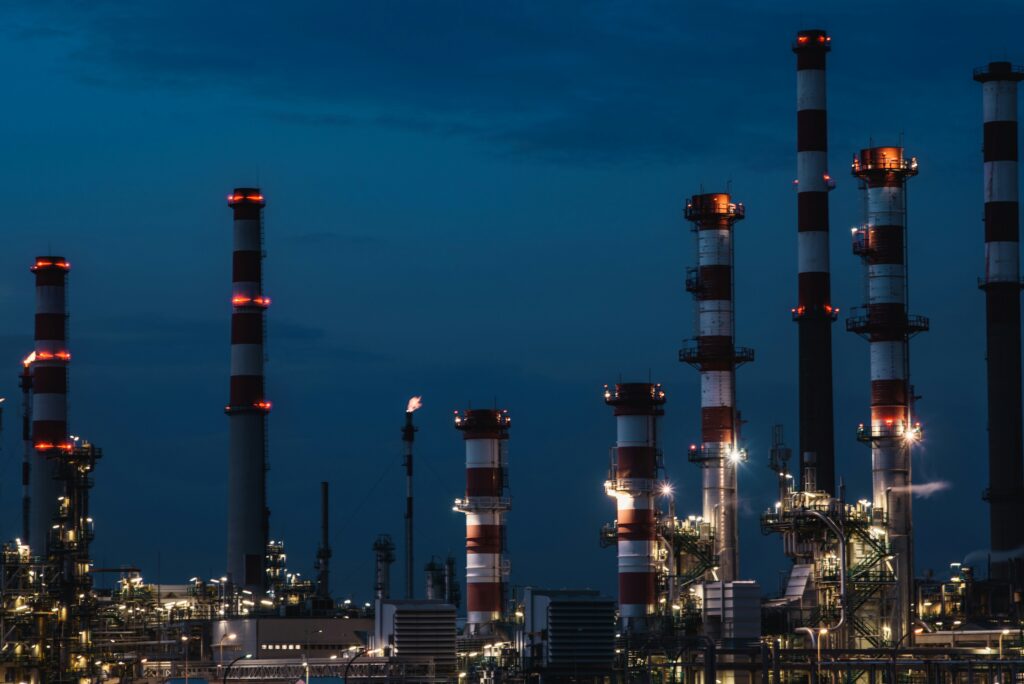
1,200 Nm³/h EBD demonstrator at a relevant site.
Hybrid EBD + biofilter pathway.
150-250 h continuous operation target.
INDOOR AIR QUALITY
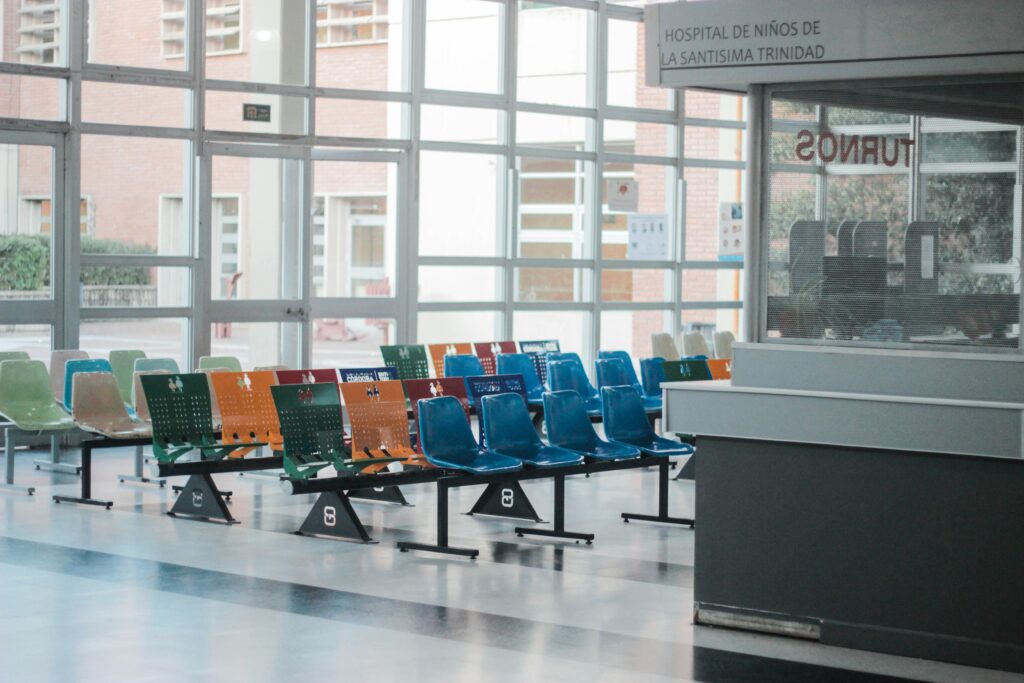
IAQ pilot with MWS components under relevant protocols for sensitive applications.
Together demonstrating TRL 6.
DEMONSTRATION & VALIDATION
EBD components up to 150 mm in diameter have been fabricated by Spark Plasma Sintering (SPS) and validated in plasma reactor tests. However, radial temperature gradients during SPS can produce heterogeneous porosity in larger parts, leading to high rejection rates and limiting economic scalability.
Conventional sintering can produce homogeneous materials but requires long firing cycles, multiple processing steps and extensive post-firing machining. PARADISE therefore investigates Microwave Sintering as the primary route to combine rapid processing with improved temperature uniformity, reproducibility and energy efficiency.
INDUSTRIAL AIR TREATMENT
1,200 Nm³/h EBD demonstrator at a relevant site.
Hybrid EBD + biofilter pathway.
150-250 h continuous operation target.
INDOOR AIR QUALITY
IAQ pilot with MWS components under relevant protocols for sensitive applications.
Together demonstrating TRL 6.
OBJECTIVES & METHODOLOGY
PARADISE follows a progressive, risk-aware methodology. First, small EBD components are produced and characterised to optimise material and process parameters. Second, the microwave furnace is modelled and adapted for large components. Third, large MWS-manufactured plates are validated mechanically and in plasma reactors against SPS reference parts. Finally, the selected technology is integrated into industrial and indoor-air demonstrators for TRL 6 validation.
MWS is the primary manufacturing route, while SPS remains a validated backup. This approach reduces scale-up risk while ensuring that manufacturing, reactor performance, regulation and market preparation advance in parallel.

OBJECTIVES & METHODOLOGY
PARADISE follows a progressive, risk-aware methodology. First, small EBD components are produced and characterised to optimise material and process parameters. Second, the microwave furnace is modelled and adapted for large components. Third, large MWS-manufactured plates are validated mechanically and in plasma reactors against SPS reference parts. Finally, the selected technology is integrated into industrial and indoor-air demonstrators for TRL 6 validation.
MWS is the primary manufacturing route, while SPS remains a validated backup. This approach reduces scale-up risk while ensuring that manufacturing, reactor performance, regulation and market preparation advance in parallel.
EXPECTED IMPACT

EXPECTED IMPACT